


TL;DR: Many startups struggle to sustain growth after early success. This blog explores how systems thinking helps founders see their business as an interconnected system.
Main points:
Many startups take off fast, but few maintain steady growth. Early wins often fade as teams expand and decisions multiply. When problems pile up, leaders focus on symptoms instead of causes. They may hire faster, add tools, or change direction without understanding the deeper system behind the slowdown.
Systems thinking helps founders see how people, processes, and results connect across the business. By viewing the startup as a living system rather than separate parts, leaders can spot hidden patterns that slow growth. This mindset builds resilience and clarity, turning daily challenges into insights that support lasting success.
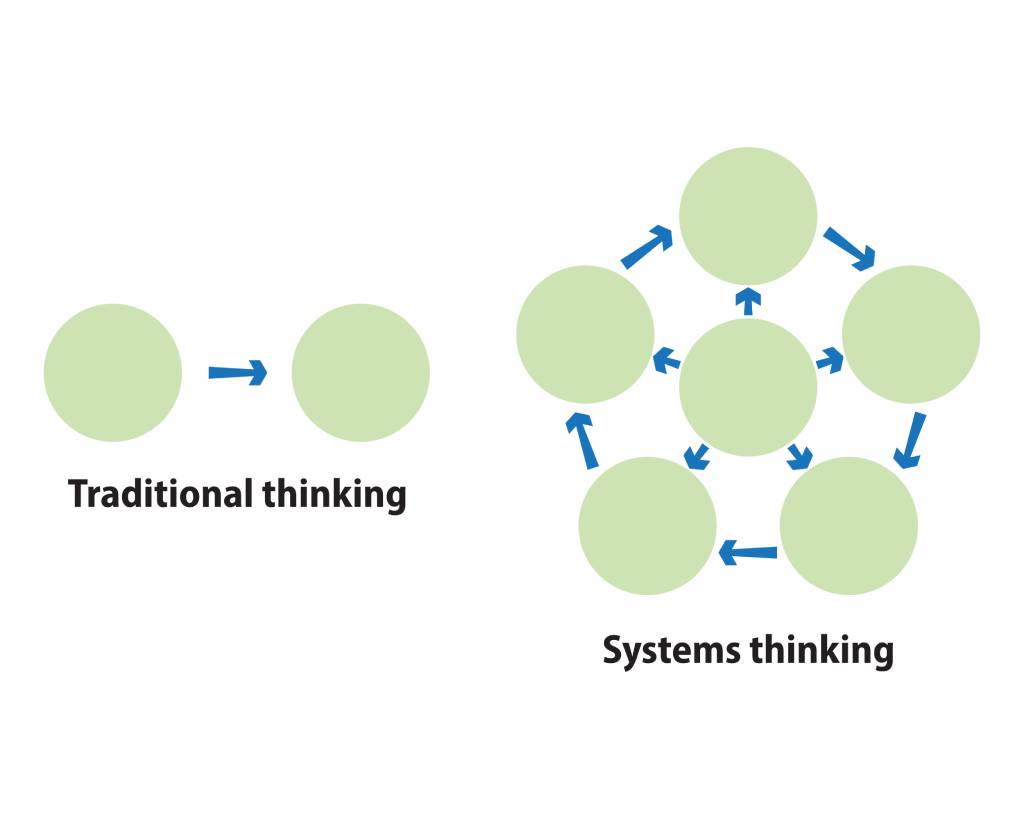
Systems thinking is a way of understanding how different parts of a business influence one another. Instead of fixing single issues in isolation, it looks at how actions, people, and processes interact across the whole system.
So, what is meant by systems thinking? It’s a mindset that views a company as a network of relationships rather than a set of separate departments. When one part shifts, such as hiring, product design, or communication, it affects everything else.
What best describes systems thinking is its focus on patterns and feedback. For example, if customer feedback slows because the product team feels overloaded, that delay affects marketing and revenue. Spotting those loops early on helps leaders make better decisions.
Simple systems thinking examples include:
The heart of systems thinking lies in five human qualities that guide better decisions: curiosity, clarity, compassion, choice, and courage.
These traits help leaders move beyond quick fixes and see the full picture behind business challenges:
Both systems thinking and design thinking help startups solve problems, but they approach them differently. Understanding how they fit together helps leaders balance creativity with structure when planning how to scale a startup.
Design thinking focuses on people first. It encourages teams to understand user needs, test ideas quickly, and refine products through feedback. It’s ideal for innovation and creating solutions that customers love.
Systems thinking, on the other hand, looks beyond a single product or user problem. It examines how different parts of a business interact (people, processes, and results) to see where hidden constraints may limit growth.
For example:
In practice, the two methods complement each other. Design thinking drives innovation, while systems thinking keeps the organization balanced as it expands. Startups that use both tend to grow faster and with fewer disruptions.
Scaling a business often feels chaotic. Teams grow, processes multiply, and communication becomes harder to manage. Many founders face the same startup scaling challenges: fast hiring, unclear priorities, or siloed teams. Systems thinking helps organize this complexity into something manageable and sustainable.
To apply systems thinking in growth:
Systems thinking gives founders the perspective to scale with balance and intent. It helps them see connections, learn from feedback, and make choices that strengthen the business over time. Growth is also about support, shared learning, and strong relationships.
Gravitate connects founders and investors who want to grow smarter, not just faster. If you’re ready to scale your startup with the right community behind you, join Gravitate today.
